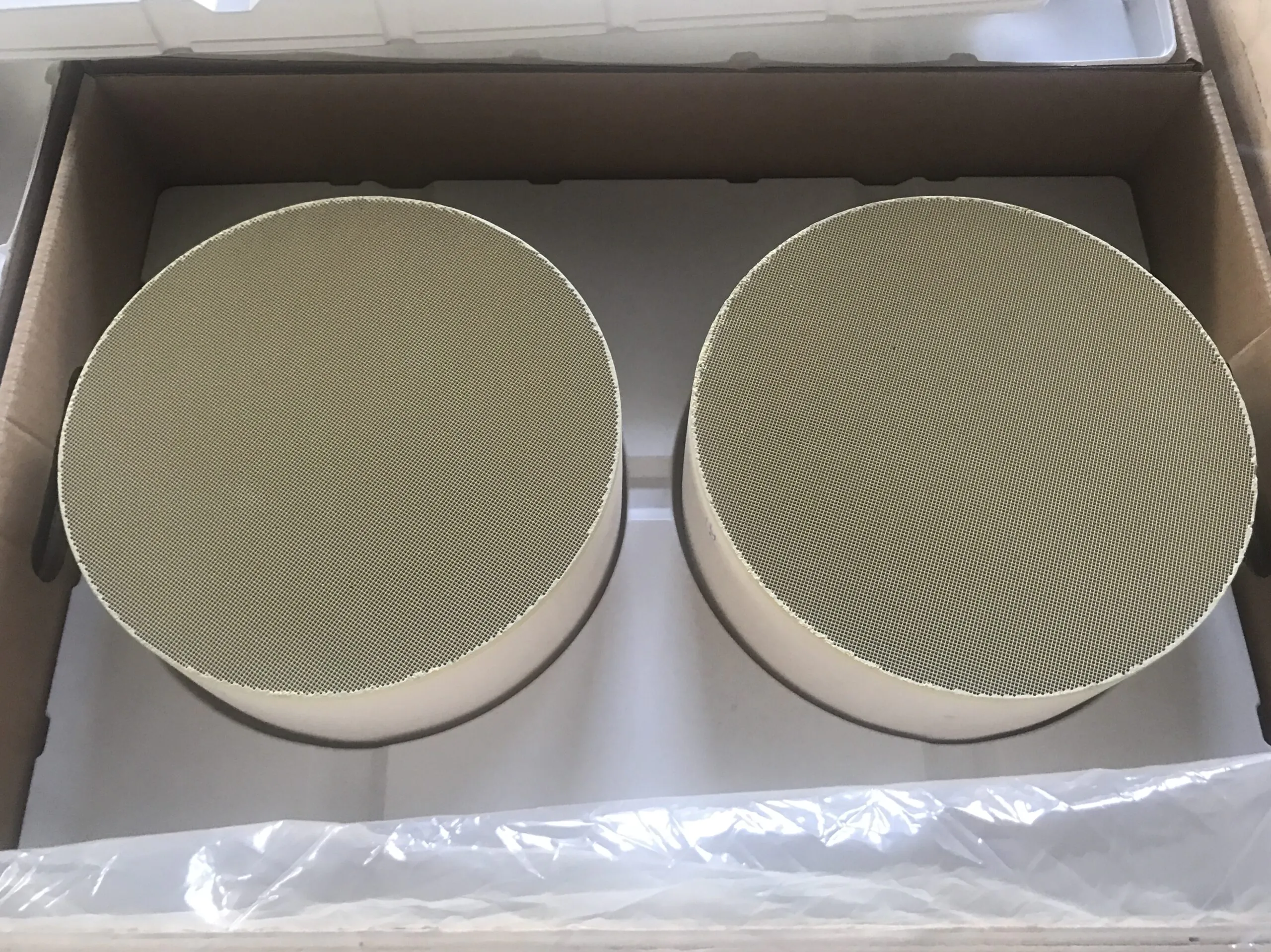
Diesel aftertreatment design has traditionally been assessed against steady-state conversion efficiency, but regulatory and engineering attention has moved toward the conditions where selective catalytic reduction systems are least comfortable. Low exhaust temperature, transient load changes, and prolonged low-load operation now receive greater scrutiny because exhaust heat is not always sufficient for urea decomposition and catalytic activity. This shift is changing how systems are configured, how catalyst formulations are compared, and how suppliers are evaluated. Hualian Catalyst supplies cordierite-based substrates for diesel emission control, and its product information can serve as a reference when reviewing how substrate specifications relate to these operating realities.
Low-Load Thermal Management and System Layout
Engine efficiency improvements have reduced the thermal energy available in the exhaust, which can push aftertreatment into lower temperature regimes during normal operation. Selective catalytic reduction relies on urea decomposition and catalytic activity above a usable temperature threshold, and under sustained low-load cycles the exhaust may not reach that range without some form of thermal intervention. This has made thermal management a design variable rather than an afterthought, and it has implications for substrate selection and packaging.
Close-coupled arrangements bring the catalyst nearer the engine to capture higher exhaust temperatures, but proximity also raises ammonia storage and slip considerations because the catalyst may be warmer and more active under certain conditions. Electrically heated catalysts represent another approach, using active heating to lift the system above the threshold temperature during cold-start or low-load phases. Reported experimental work on combined electrically heated catalyst and close-coupled selective catalytic reduction (SCR) systems has indicated improved low-load nitrogen oxide reduction, though it also noted secondary emission trade-offs linked to intensified thermal and reductant management.
These options are not drop-in solutions. They change the control problem and the demands placed on the catalyst substrate, including thermal cycling severity and the distribution of ammonia across the channel structure. Reviewing a proposed layout against the expected duty cycle is generally more informative than comparing a single steady-state conversion figure. A configuration that performs well on a warmed-up test may behave differently during repeated cold starts or extended idle periods.
Reductant Delivery and Deposit Risk at Low Temperature
Urea dosing strategies have become more closely controlled, but low-temperature operation introduces a physical constraint that control alone cannot fully resolve. When exhaust temperatures are low or injection rates are high, urea-water solution may not decompose completely, leading to deposit formation in the exhaust path or on the catalyst face. These deposits can reduce conversion efficiency and contribute to ammonia slip, and they may also affect backpressure and component durability over time.
Heated mixer designs and revised injection strategies have been explored as ways to inhibit deposit formation. These approaches generally aim to improve local thermal conditions and spray atomization, promoting more complete evaporation and thermolysis of the urea solution before it reaches the catalyst surface. By optimizing the mixing distance and gas turbulence, such designs help achieve a more uniform ammonia distribution across the exhaust stream. The relevance for substrate selection is indirect but important, because a mixer or thermal solution that changes ammonia uniformity at the catalyst face may interact with cell geometry and coating characteristics.
Reviewing reductant delivery and substrate layout together can help avoid a configuration that performs acceptably on a steady-state test but behaves differently across a transient cycle. Ammonia storage within the washcoat changes as temperature and flow vary, and the rate at which stored ammonia is released or consumed affects both conversion and slip. A substrate with a different cell density or wall thickness may respond differently to those storage dynamics, which is why system-level review remains useful.
Catalyst Chemistry Trade-Offs Under Real Operating Conditions
The choice between zeolite-based and vanadium-based formulations involves trade-offs that become more visible under low-load and transient conditions. Iron-exchanged zeolite formulations have shown relatively strong thermal durability under hydrothermal aging, but their low-temperature activity can depend on the nitrogen dioxide to nitrogen oxide ratio, and active sites may be affected by aging in ways that reduce low-temperature performance. Copper-exchanged zeolite formulations have been reported to show lower sensitivity to that ratio in a critical low-temperature range, though hydrothermal stability at very high temperatures has been a subject of investigation.
Vanadium-based formulations have shown durability against hydrocarbon exposure and sulfur poisoning, but they can be more susceptible to deactivation at temperatures associated with active diesel particulate filter regeneration. These are general tendencies rather than universal rankings. The appropriate formulation depends on the expected temperature profile, fuel sulfur content, regeneration strategy, and duty cycle. A formulation that performs well in a high-temperature application may not offer the same low-temperature behaviour needed for a low-load cycle.
Reviewing catalyst chemistry alongside the intended operating envelope is therefore more robust than selecting on a single performance claim. It is also reasonable to ask how a proposed formulation has been aged and tested, because laboratory aging may not reproduce the combined effects of sulfur, ash, and thermal cycling seen in service. The answers can help clarify whether a formulation is suited to a particular application rather than simply meeting a declared standard.
Supplier Evaluation for Transient and Low-Load Performance
When reviewing catalytic converter companies, procurement teams may find that conventional specification comparisons do not fully capture low-load and transient behaviour. A substrate that performs well on a steady-state flow bench may respond differently under the thermal cycling and ammonia storage changes that occur across a low-load cycle. It is therefore reasonable to ask how a proposed system has been evaluated against representative transient conditions and whether validation includes cold-start or low-temperature phases alongside steady-state points.
Documentation practices also matter. Inspection criteria, dimensional tolerance checks, and coating adhesion review are standard, but the willingness to share the scope of those checks and how specification changes are communicated after approval can indicate how variation is managed across repeat orders. A documented revision process can help reduce the risk of silent drift between deliveries, particularly when a component is produced over an extended period.
For a diesel application, the selective catalytic reduction catalyst specification should be reviewed against the expected temperature window, flow range, and packaging constraints rather than against a single performance figure. Validation may include thermal cycling, pressure-drop checks, and ammonia slip assessment under representative conditions. Hualian Catalyst provides SCR catalyst options for diesel engines and can discuss substrate dimensions, coating selection, and canning requirements with system integrators. A structured dialogue that addresses low-load thermal behaviour, reductant delivery, and catalyst chemistry together is likely to be more informative than comparing catalogue figures alone.
