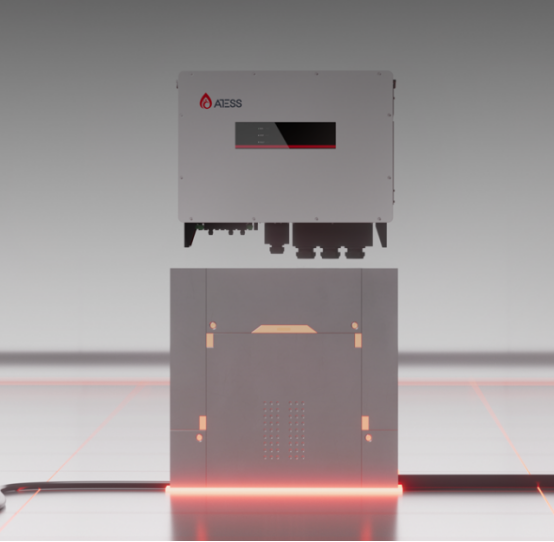
When commercial and industrial sites plan solar-plus-storage, the inverter choice shapes how effectively the system handles load continuity, self-consumption, and future expansion. A hybrid inverter consolidates solar conversion, battery management, and grid interaction into one assembly, which simplifies procurement and installation. Atess supplies a Solar Inverter with Battery platform that spans a wide power envelope, and their design choices give project developers a set of technical checkpoints to examine during specification.
Evaluating Power Range and Site Scalability
The power rating of a hybrid inverter must match both present load and potential growth. Atess builds units from 5 kW up to 150 kW, and they can parallel selected models to reach system capacities of 1200 kW. This scalability matters for multi-building facilities or phased rollouts where initial investment needs to support later expansion without replacing core equipment. Multiple maximum power point trackers inside the unit allow string-level optimization, so arrays with uneven orientations or partial shading keep harvesting energy efficiently.
Battery Compatibility and Transfer Speed
A Solar Inverter with Battery should accommodate the battery chemistry and voltage that the project specifies, without requiring additional DC converters. Atess designs their hardware with flexible battery voltage ranges, which helps integrators pair lithium or lead-acid banks directly. Grid backup performance is equally important; the equipment switches from on-grid to off-grid operation within 10 milliseconds when utility supply fails. That transfer speed keeps sensitive industrial loads online and avoids costly resets on production lines.
Programmable Modes and Long-Term Support
Facility managers often need to shift between self-consumption, peak shaving, and export strategies depending on time-of-use tariffs and demand charges. Atess provides user-selectable working modes in the hybrid inverter firmware, so operators can adjust power flow priorities without on-site hardware changes. This programmability makes the same physical inverter work across different operational goals over the project lifetime.
Procurement decisions for a Solar Inverter with Battery benefit from reviewing not just kilowatt ratings, but also how the unit handles scalability, battery interface, and control flexibility. Atess packages these capabilities across a unified range, giving C&I project teams a clear starting point for technical comparison.
