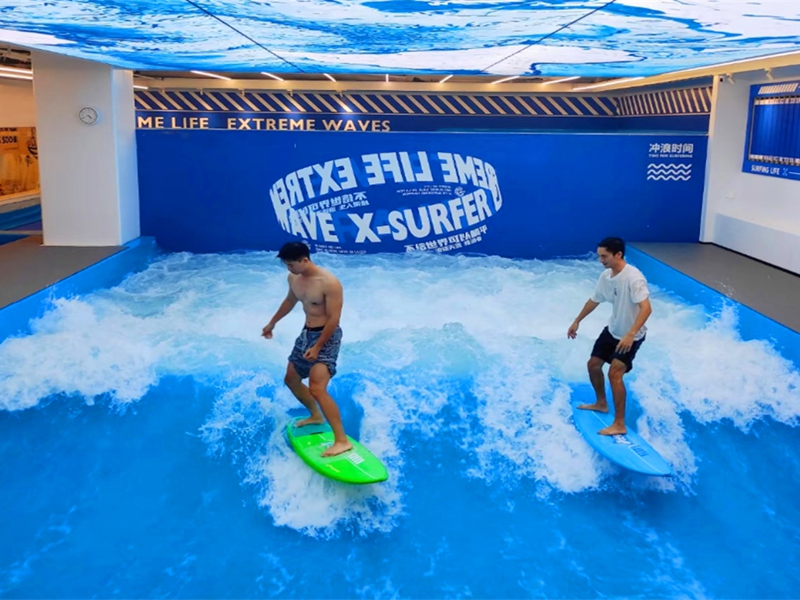
A water-based surf simulator provides a controlled surfing activity by moving water through a purpose-designed riding area. In the sheet-flow format, the rider works against a fast current travelling over the surface, creating an activity that can be incorporated into a commercial leisure venue.
That definition establishes the movement involved before questions of size or appearance arise. The equipment concept, its intended riders and its relationship with the wider venue all need separate descriptions. A recognisable surfing image alone leaves those practical parts of the attraction unspecified.
Follow the Water across the Riding Surface
The sheet-flow surf simulator sends water upwards across a riding surface while the participant works against it. The experience is organised around that interaction with the current. It does not require the rider to follow the long descent associated with a conventional water slide.
The riding area in Jinchao’s Surfing Simulator has a soft waterproof surface. Water is sent upwards over it as a thin, fast-moving sheet by a pressurised system and nozzles. The riding dimensions remain specific to the venue under discussion.
The direction of flow helps explain the concept. The fixed riding surface provides the reference for describing the rider’s own movement. The equipment discussion can therefore distinguish the water’s movement from the rider’s actions, rather than treating the installation as a slide with a different name.
A description of the surface also needs its proper scope. Soft and waterproof are material characteristics stated for the riding area. They do not establish rider limits, staffing arrangements or the operating procedure for a particular venue; those questions belong with the selected equipment proposal.
Distinguish Sheet Flow from a Wave Pool
A surfing simulator and a wave pool can both involve moving water while producing different experiences. A wave-pool concept generates waves within a basin.
Approximately 0.3–1 m and approximately 2–3 m are Jinchao’s artificial-wave and vacuum-wave height ranges, respectively. The vacuum system produces waves in the basin by releasing a pressure difference.
Pool specifications consequently answer a different equipment question. A published wave height or basin area cannot define the sheet-flow riding zone. The proposed attraction needs dimensions and operating information associated with its own configuration, rather than numbers taken from another product in the same catalogue category.
An investor discussing the alternatives with a water park manufacturer can begin by describing the desired activity. The answer may concern riding against the surface flow or participating in a pool’s wave experience. Establishing that distinction narrows the technical discussion before a layout is priced.
The terminology also affects project comparisons. Two venues advertising a surfing activity may be offering different physical arrangements. A useful reference identifies the actual equipment format, so the comparison concerns the experience and installation being considered rather than a shared promotional description.
Match the Concept to the Intended Riders
Rider expectations belong in the surf simulator brief before the equipment is placed on a site plan. Jinchao presents this concept for adventurous teenage riders. That positioning is a starting point for attraction planning, not evidence that every visitor group wants the same activity or participation pattern.
Commercial parks, resorts and leisure projects can consider the concept as part of a defined attraction offer. A resort may be examining an additional activity, while a park may be comparing it with an existing ride mix. In either case, the brief needs to identify the intended riders and purpose.
The venue can explain the role the attraction is meant to play among its other leisure uses. An individual challenge may contribute something different from a shared raft or a group game. The proposed role gives the equipment discussion a purpose beyond adding another product category.
The site’s measured riding zone and intended participation belong in the discussion with a water park manufacturer. They establish the installation being proposed, including how it relates to the other attractions nearby. Jinchao’s approximately 36,000 m² manufacturing base supports its broader equipment work.
Observation and movement around the riding area deserve attention in the same brief. People approaching the activity, watching it or moving elsewhere create different uses of adjacent space. The layout can identify those uses without assuming that the equipment’s riding boundary includes them all.
Resolve a Venue-Specific Equipment Proposal
The Surfing Simulator offered by Jinchao has a surfing area customised to the venue. A dimensional enquiry can identify the usable site, nearby attractions and the intended participation. The resulting discussion concerns a particular installation rather than an assumed footprint attached to the product name.
Circulation, service access and supporting facilities remain part of the development programme. They can be shown beside the equipment area so each has an identifiable function. A revised riding boundary may alter what remains available for each of those neighbouring functions.
The enquiry form and email provide routes for submitting a site plan to Jinchao. The water park manufacturer has a wider record of more than 300 projects; its engineering, installation guidance and after-sales services can be considered within the proposed equipment scope.
A sheet-flow attraction is defined by the current on its surface, not by a wave height. The brief identifies how water moves, who the attraction is intended to serve and which surrounding functions support its use. Those descriptions give the next design discussion a precise subject.
