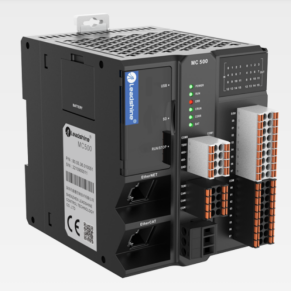
Selecting an Industrial PLC is more than a component purchase; it is a strategic decision that impacts a machine’s performance, reliability, and your company’s operational efficiency for years. The supplier behind the product plays an equally critical role, as they provide the support, innovation, and stability that ensure long-term success. In a market filled with options, identifying the right industrial PLC supplier requires a structured evaluation beyond just technical specifications and price. Key considerations should encompass technological alignment, global support capability, product reliability, and total cost of ownership. For businesses seeking a partner that balances advanced functionality with practical value, companies like Leadshine present a compelling case, offering not just their MC500 series and other compact PLC solutions but a comprehensive support ecosystem tailored for the automation industry.
Assess Technical Compatibility and Application-Specific Expertise
The primary criterion is whether the supplier’s Industrial PLC portfolio can technically fulfill your application’s present and future needs. This involves evaluating processing power, I/O capacity, motion control capabilities, and communication protocols. A suitable industrial PLC supplier should offer a scalable range. For instance, Leadshine provides a spectrum from small compact PLC units for simple tasks to powerful medium and large controllers for complex applications. Their MC500 series is a benchmark, offering motion control for up to 32 EtherCAT axes and high-speed pulse outputs, which is vital for applications in packaging or CNC. Beyond the hardware, assess the supplier’s application expertise. Do they understand the challenges of your industry, whether it’s photovoltaic, textile, or electronics? A supplier with proven experience in your sector, like Leadshine, which serves industries from 3C to logistics, can provide invaluable pre-sales consultation and ensure their Industrial PLC is well-suited to specific environment of a mature supplier.
Evaluate Global Support Infrastructure and Local Presence
Automation equipment is deployed worldwide, and downtime is costly. Therefore, the geographic and technical support network of industrial PLC supplier is paramount. A supplier with a strong global footprint ensures access to local technical support, spare parts, and training. Leadshine exemplifies this model with its headquarters in Shenzhen, over thirty domestic offices in China, and a significant international presence through Leadshine America Inc. and a global distribution network. This structure means that whether you are commissioning a line in Asia or servicing a machine in North America, expert support is accessible. For a business with international operations or ambitions, choosing a supplier with this level of organized global and local support is not a luxury but a necessity to guarantee swift response times and minimize operational risk.
Analyze Total Cost of Ownership and Value Proposition
The initial purchase price is only one part of the cost equation. A true evaluation of an industrial PLC supplier must consider the Total Cost of Ownership (TCO). This includes the cost of programming software (often provided free by suppliers like Leadshine), training, maintenance, and the potential cost of downtime. A compact PLC that is easy to program and integrate can significantly reduce engineering hours. Furthermore, a platform that is scalable and future-proof protects your investment. Leadshine’s controllers, for example, are designed for ease of use and integration, supporting multiple industrial networks (EtherCAT, EtherNet/IP, OPC UA) to prevent obsolescence. A supplier that offers a strong value proposition—providing robust, feature-rich products like high-performance Industrial PLC units at an economical price point—delivers greater long-term value than one competing on price alone.
Prioritize Ease of Use and a Cohesive Ecosystem
Complexity is the enemy of efficiency. The ideal industrial PLC supplier provides products that are powerful yet intuitive to implement. This includes user-friendly programming environments, clear documentation, and hardware designed for straightforward installation. Leadshine emphasizes making its technology accessible, a philosophy that extends to its control products. Their compact PLC and larger controllers are designed to simplify development, with features that reduce wiring and programming time. Additionally, consider the supplier’s broader ecosystem. A supplier with a cohesive ecosystem, like Leadshine’s range spanning stepper products, servo products, and controls, ensures better interoperability, simplifies system design, and creates a single point of accountability, reducing integration headaches.
Consider Strategic Alignment and Long-Term Partnership Vision
Finally, view the selection as forging a long-term partnership. Does the industrial PLC supplier have a vision aligned with industry trends, such as IIoT connectivity and smart manufacturing? Are they continuously investing in R&D? Leadshine, with its mission to “provide competitive motion control products and solutions,” demonstrates this forward-looking approach. Their development of controllers with OPC UA and cloud-ready connectivity shows an understanding of future needs. A supplier that acts as a strategic partner will contribute to your competitive advantage by providing insights, innovative solutions, and reliable support throughout the machine’s lifecycle, rather than just acting as a transactional vendor.
In conclusion, choosing the right industrial PLC supplier is a multifaceted process that balances technical capability with commercial and support considerations. It requires looking at the supplier’s expertise, global support network, quality and delivery reliability, total value proposition, product usability, and strategic direction. By meticulously evaluating these factors, businesses can select a partner that not only provides a high-quality Industrial PLC—be it a full-featured system like the MC500 or a more compact PLC—but also contributes to the overall success, reliability, and innovation of their automated equipment. A supplier like Leadshine, with its established track record, comprehensive portfolio, and customer-centric focus, embodies the qualities that can make such a partnership a strategic asset for any business in the automation field.
