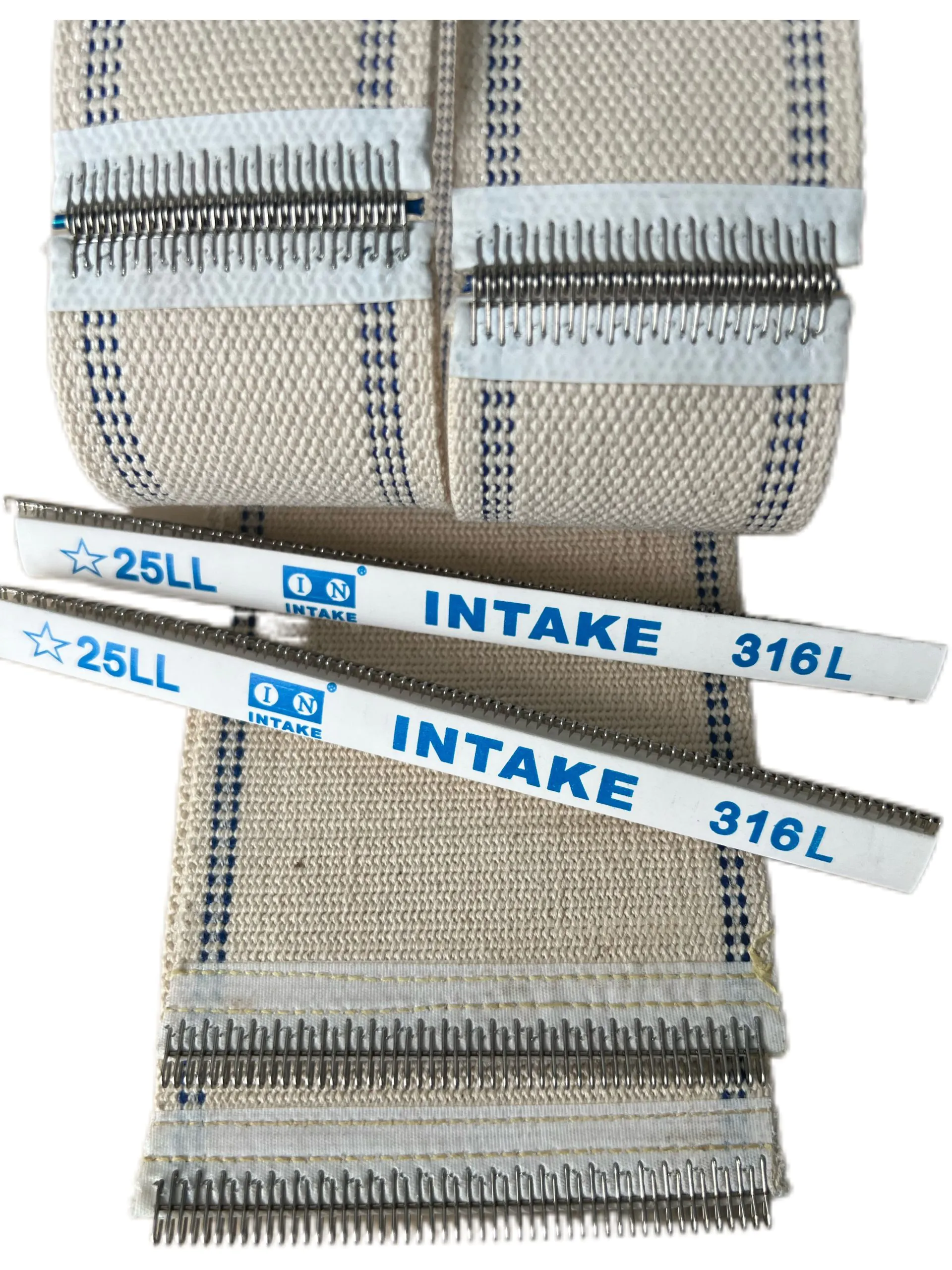
For conveyor belt manufacturers and industrial maintenance teams, the lowest purchase price does not always represent the lowest cost over the service life of a conveyor system. A fastening system affects installation time, joint replacement, belt compatibility, maintenance frequency, and the amount of downtime associated with repairs. For this reason, procurement teams comparing a belt fastener manufacturer should evaluate the complete maintenance value of the fastening system rather than comparing unit prices alone.
The right Intake belt fasteners need to match the belt thickness, pulley diameter, operating environment, installation method, and expected maintenance cycle. These factors become particularly important for manufacturers supplying logistics, washing, filter mesh, packaging, and other continuous-conveying applications.
What Makes a Belt Fastener Valuable Over the Long Term?
The first comparison point is compatibility. A fastener that does not match the belt construction can create installation difficulties or unnecessary stress at the joint. Procurement specifications should therefore include belt thickness, fastener material, hook configuration, wire diameter, hinge-pin dimensions, and minimum pulley diameter where applicable.
Intake’s published product range demonstrates why a single specification cannot cover every conveyor requirement. Its catalog includes 304S and 316L products, along with different wire hook and carded fastening configurations. For example, the Wire Hook Fastener 86048 is made from 304S, uses 84 hooks per 12 inches, supports belt thicknesses of 3.2–4.5 mm, and specifies a minimum pulley diameter of 89 mm. Its wire diameter is 1.4 mm and the approximate hinge-pin diameter is 2.3–2.4 mm. These details provide procurement teams with practical parameters for technical comparison.
Material selection is another long-term consideration. Intake identifies stainless-steel options including 304S and 316L across its range. The appropriate material depends on the application and operating environment, particularly where moisture, washing processes, or corrosion exposure are relevant. A purchasing team should therefore evaluate material against actual operating conditions instead of assuming that one grade is suitable for every belt.
How Installation Affects Maintenance Cost
A fastening system can influence maintenance value through the installation process itself. If a joint requires excessive labor or inconsistent application, replacement work can become more time-consuming and may affect production scheduling.
This is one reason a belt fastener manufacturer with both fastening products and installation equipment can offer a more practical sourcing option. Intake’s product portfolio includes hydraulic belt fastener machines and manual roller lacers alongside wire hook and carded fastening systems. This allows manufacturers to consider the fastening component and installation method together rather than purchasing unrelated equipment from multiple suppliers.
Wire hook systems can also be evaluated according to joint profile and installation characteristics. Intake states that its wire hook fastening systems use hooks welded together by a common bar and are designed with a low-profile configuration. The company also offers different wire diameters, materials, strip lengths, and styles for application-specific requirements. For lightweight conveyor belts, these characteristics can be relevant when the joint must operate smoothly around conveyor rollers and remain compatible with belt-cleaning equipment.
Maintenance teams should also consider whether individual fasteners can be replaced efficiently when a belt joint requires service. Easy replacement can reduce the time spent on routine repairs, but the actual maintenance benefit depends on correct product selection and installation.
Comparing Supplier Capability, Not Just Product Price
A belt fastener should be assessed as part of a supply relationship. For manufacturers purchasing recurring quantities, supplier consistency, customization capability, technical assistance, samples, and delivery performance can influence the total procurement cost.
Intake states that it provides customized models in different sizes, lengths, and materials. Its official company information also highlights independent R&D, high-precision production equipment, and pre- and after-sales service. For B2B buyers, these capabilities can be useful when standard fasteners do not fully match a customer’s belt specifications or when a manufacturer needs to qualify a new fastening solution before volume purchasing.
Sampling is another practical part of supplier evaluation. Instead of relying entirely on catalog descriptions, a conveyor belt manufacturer can test fastening products against its own belt construction and production process. This can help identify compatibility issues before larger orders are placed.
Lead time should also be included in the comparison. A lower unit price provides limited value if replacement components are unavailable when a production line requires maintenance. Intake states that its standard products can be shipped within 7–15 working days after order confirmation. These lead-time commitments can be relevant to buyers managing inventory and replacement schedules.
Building a Long-Term Fastener Procurement Strategy
For manufacturers serving logistics, filter mesh, washing, or light-duty conveyor applications, comparing fasteners on price alone can overlook important maintenance factors. A more complete evaluation considers material, belt thickness, pulley compatibility, joint design, installation method, replacement convenience, customization, samples, technical support, and delivery capability.
Intake has specialized in industrial belt fasteners and related R&D and production for more than two decades. Its published product portfolio covers multiple mechanical fastening systems and installation equipment, giving industrial buyers several options when matching a fastening solution to a particular conveyor application.
The most useful comparison is therefore not simply which supplier offers the cheapest fastener. It is which supplier can provide a technically compatible product, consistent production quality, suitable installation support, and dependable replenishment over the life of the conveyor system. For B2B procurement teams, that broader view makes it easier to measure genuine maintenance value and control the hidden costs associated with belt replacement and production downtime.
