Digital dentistry is changing how dentists diagnose, plan, and complete treatments. Traditional impressions often require physical materials, manual handling, and additional time for model preparation. Today, an intraoral scanner allows dental professionals to capture detailed digital impressions directly from a patient’s mouth, improving workflow efficiency and communication between clinics and laboratories.
With the development of advanced scanning technology, a dental 3D scanner can help shorten treatment cycles by streamlining data collection, improving collaboration, and supporting more predictable treatment planning. SHINING 3D Dental provides digital dental solutions, including the Aoralscan series, designed to support modern clinical workflows across restorative dentistry, implant dentistry, and orthodontics.
How Can an Intraoral Scanner Speed Up Dental Treatment?
One of the biggest advantages of an intraoral scanner is reducing the time required to collect dental impressions. Traditional impression methods involve preparing trays, applying impression materials, waiting for setting, and sending physical models to laboratories. Digital scanning replaces these steps with a direct scanning process.
Dentists can capture three-dimensional oral data and immediately review the scanned image on a computer screen. If any area requires improvement, the dentist can rescan specific sections instead of repeating the entire impression process. This helps improve appointment efficiency and reduces unnecessary delays. A modern dental 3D scanner uses optical technologies to collect detailed surface information and create digital models. These digital files can then be transferred electronically, allowing dental teams and laboratories to begin designing restorations or treatment plans faster.
Dental treatment often requires cooperation between dentists, technicians, and patients. Physical impressions need transportation, which can add extra time to the workflow. Digital scanning allows clinicians to send three-dimensional data instantly to dental laboratories.
This faster communication helps technicians understand clinical requirements more clearly. Digital files can be reviewed, adjusted, and processed through computer-aided design and manufacturing systems. As a result, dentists can reduce waiting times for crowns, bridges, aligners, and other dental restorations.
SHINING 3D Dental’s Aoralscan solutions support digital workflows by providing output formats such as STL, OBJ, and PLY, making scanned data compatible with various dental design applications.
The Role of Dental 3D Scanner Technology in Treatment Planning
A dental 3D scanner provides a visual digital model of a patient’s oral structures. Compared with traditional physical impressions, digital models allow dentists to examine tooth surfaces, occlusion relationships, and treatment areas more conveniently. For orthodontic treatment, digital scans can support aligner planning and progress monitoring. In restorative procedures, dentists can use digital impressions to design restorations with improved workflow control.
A digital model also helps patients better understand their treatment plans. Instead of explaining procedures only through words, dentists can show patients a visual representation of their current dental condition and possible treatment outcomes.
Dental treatments usually involve multiple stages, including impression taking, model creation, design, manufacturing, and final fitting. A dental 3D scanner simplifies the first stage by creating a digital impression without the need for traditional materials.
By reducing manual procedures, dental clinics can spend more time focusing on patient care. Laboratories can also receive cleaner digital information, helping minimize adjustments during later treatment stages.
SHINING 3D Dental Aoralscan Solutions for Efficient Workflows
SHINING 3D Dental offers a range of intraoral scanner solutions under the Aoralscan product family. These scanners are designed for applications including general restorations, implants, orthodontics, dentures, and other digital dentistry workflows.
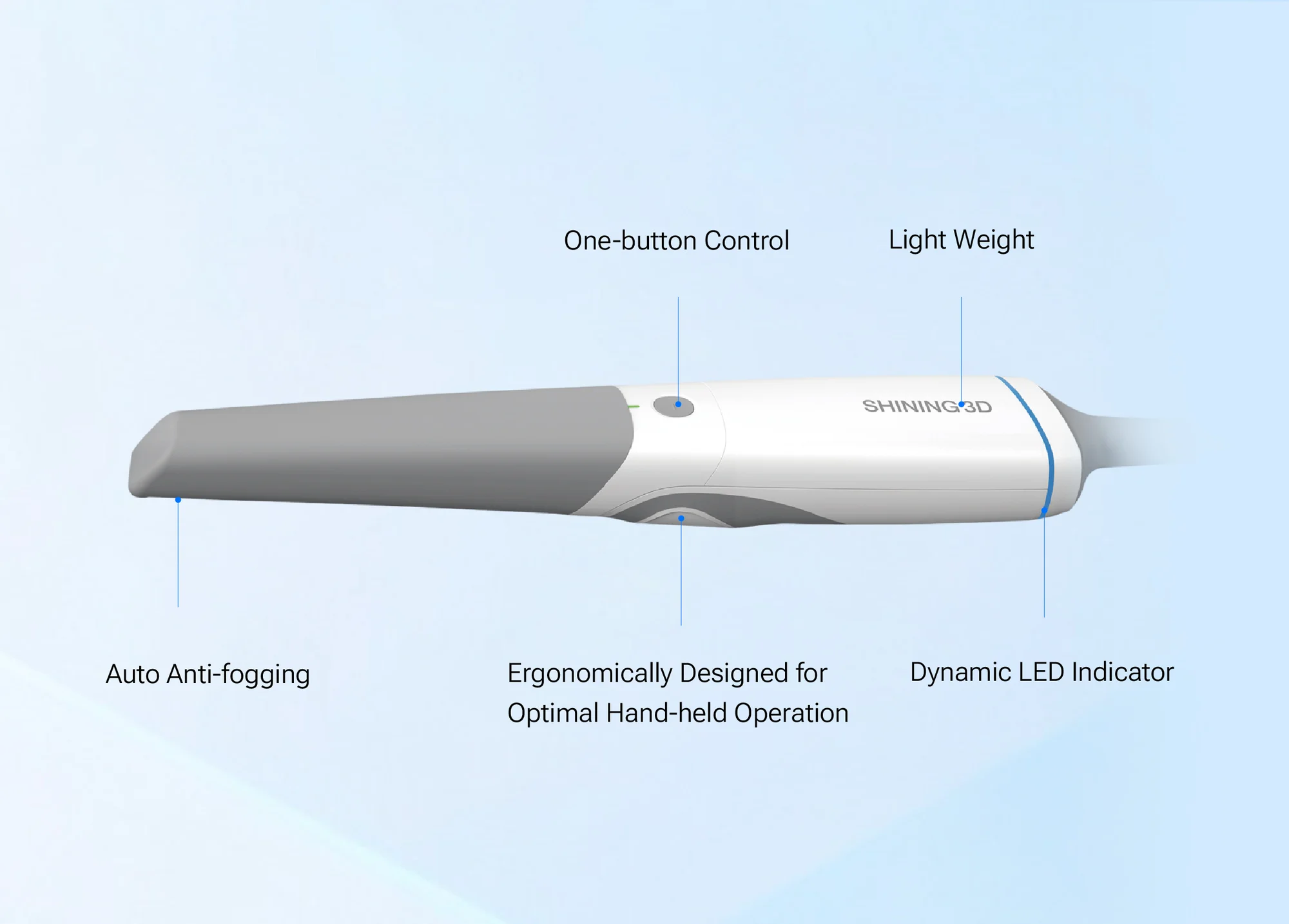
The Aoralscan 3 is one example of SHINING 3D Dental’s digital scanning technology. According to official specifications, the device features a standard scan field of 16 mm × 12 mm × 22 mm and a mini scanner tip option of 12 mm × 9 mm × 22 mm. It weighs approximately 240 g without cables and supports STL, OBJ, and PLY output formats.
These specifications help dental professionals capture digital impressions efficiently while maintaining compatibility with modern digital dentistry workflows. The lightweight design can also contribute to easier handling during daily clinical operations.
Can Digital Scanning Shorten the Overall Treatment Timeline?
Many dental treatments depend on accurate preparation before the procedure begins. Digital scanning allows dentists to collect necessary information earlier and share it immediately with dental laboratories or design software systems.
For example, when preparing a crown or implant restoration, digital impressions can help accelerate communication and reduce the time required for physical model delivery. This can contribute to shorter overall treatment schedules.
Treatment speed is not only about reducing working time for dentists. Patients also benefit from a smoother experience. Digital scanning eliminates many uncomfortable aspects associated with traditional impression materials, such as unpleasant taste or waiting during material setting.
A comfortable scanning process can improve patient acceptance of digital dental treatment. This is especially valuable for children, orthodontic patients, and individuals who experience discomfort with conventional impressions.
Conclusion
An intraoral scanner can significantly improve dental treatment workflows by accelerating impression capture, enhancing communication, and supporting digital treatment planning. As dental technology continues to develop, a dental 3D scanner provides clinics with more efficient tools for delivering modern dental care.
SHINING 3D DENTAL‘s Aoralscan solutions combine digital scanning technology with practical clinical applications, helping dental professionals create smoother workflows for restorative, implant, and orthodontic treatments. By adopting digital scanning solutions, dental clinics can improve efficiency while providing patients with a more comfortable and predictable treatment experience.
