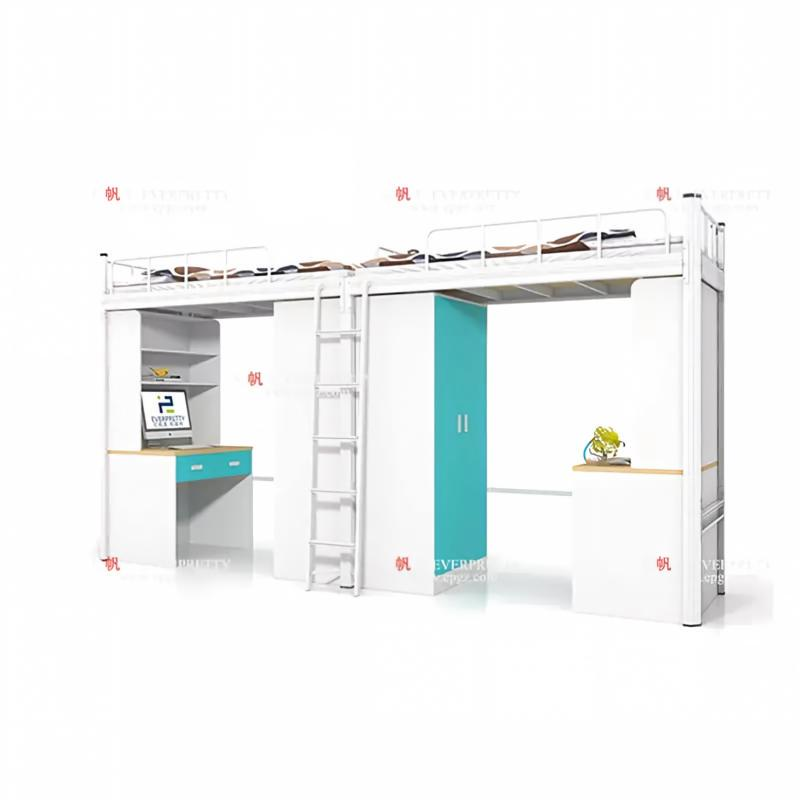
Steel bunk beds are widely used in student hostels and boarding schools because they make it possible to accommodate more students within a limited floor area. However, choosing beds for an educational project involves more than deciding how many units a room needs. Room dimensions, student routines, storage requirements, maintenance access, and installation arrangements all influence the final selection.
For schools and project buyers, Everpretty school furniture offers dormitory furniture solutions with OEM and ODM services. The company supports projects from initial design and product customization to manufacturing and delivery, helping buyers coordinate furniture requirements for different educational environments.
Planning Dormitory Layouts Before Selecting Steel Bunk Beds
The first step in selecting bunk beds is understanding how the dormitory will be used. A room designed for younger boarding school students may have different requirements from one intended for university students or vocational college residents. The number of occupants, available floor space, ceiling height, and placement of doors and windows should all be considered before confirming a bed configuration.
Two-tier bunk beds make use of vertical space, but maximizing sleeping capacity should not compromise access or movement. Students need sufficient room to use ladders, access storage, and move safely around the beds.Buyers should also account for desks, wardrobes, and lockers when confirming the final layout.
What to Evaluate in a Steel Bunk Bed Manufacturer
A supplier’s ability to manufacture steel beds is only one part of the evaluation. For school projects, buyers should examine how the frame is constructed, how its components connect, and whether the design can be adapted to the intended room layout.
Frame material and surface finish:
Steel frames are commonly selected for institutional dormitories because they provide a rigid structure and are suitable for repeated daily use. Buyers should ask suppliers about the steel materials used, frame dimensions, surface treatment, and manufacturing process. A consistent coating is also important because it helps protect exposed metal surfaces during normal use and cleaning.
Connection and assembly design:
The connection system affects stability, installation, and maintenance. Buyers should check how the frame, support components, ladder, and guardrails are joined. Detachable structures may be useful when beds need to be moved or replaced.
Guardrails and access:
Upper bunks require appropriate guardrails and a practical access arrangement. The ladder should be positioned so students can climb onto the bed without creating unnecessary obstacles in the room. Schools should request product drawings and relevant safety documentation rather than relying on general descriptions or appearance alone.
A qualified bunk bed manufacturer should be able to explain these design details and provide product information that allows procurement teams to assess whether a model suits the project’s requirements.
Matching Bed Configurations with Student Needs
Not every dormitory needs the same type of bunk bed. A straightforward two-tier steel frame may be suitable for rooms where desks and wardrobes are arranged separately. In other settings, an integrated design can help organize several functions within a smaller footprint.
For example, bunk beds with built-in cabinets, shelves, or desks can reduce the need for separate furniture. Buyers should check that desks are practical to use, cabinet doors can open freely, and storage remains accessible.
Everpretty’s SF-123R metal bunk bed is one example of an integrated dormitory furniture design. This is a piece of furniture composed of a metal frame combined with a storage cabinet and desk, with customizable sizing and optional colors. The frame uses cold-rolled steel sheet with an epoxy powder-coated finish, while the cabinet and desk use HDF with melamine board and PVC edging. These details give project buyers a concrete basis for reviewing the materials and configuration of an integrated model.
Safety, Maintenance, and Long-Term Use
Dormitory furniture is used repeatedly by different students, so its design should support routine inspection and maintenance. Before placing a bulk order, schools should review the product’s structural details, assembly instructions, guardrail arrangement, ladder design, and applicable safety documentation.
Standards can provide a useful reference during this process. ISO 9098-1:2023, for example, specifies safety requirements for bunk beds and high beds within its defined scope. Buyers should check the standard’s applicability to the intended product and project, particularly when a bed incorporates additional features such as desks or storage units. A general reference to a standard should not be treated as proof that a specific product has been tested or certified.
Maintenance planning is equally important. School facility teams should understand which components can be inspected or replaced, how the surfaces should be cleaned, and whether the supplier can provide replacement parts when needed. Clear assembly instructions and consistent product specifications can also make it easier to manage beds across several dormitory buildings.
Coordinating Bulk Orders and Project Delivery
For large educational projects, buyers should confirm product specifications, production schedules, packaging, and delivery terms before manufacturing begins.
This is particularly important for customized beds or integrated furniture, where approved drawings help prevent differences between the ordered design and finished products.
Flat-pack packaging may help manage transportation and storage, but the buyer should check that the packaging protects the components and that assembly instructions are available. If the project involves multiple batches, consistent specifications across orders can help maintain a uniform appearance throughout the dormitory.
A supplier with experience in international project coordination can also help buyers manage communication between design, production, and logistics teams. This is especially relevant for distributors, contractors, and educational institutions purchasing furniture for projects outside their home markets.
Everpretty for Student Dormitory Furniture Projects
Everpretty supplies customizable school and dormitory furniture for educational projects, offering OEM and ODM services alongside design, manufacturing, and delivery support. Its product range and project coordination services help schools, contractors, and distributors source furniture according to their space and procurement requirements.
